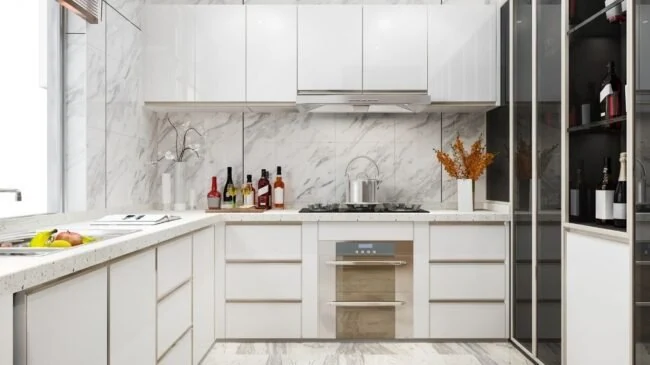
The right cabinet design starts with what happens in the room. A kitchen needs access to cookware and food; a bathroom has to work around plumbing and personal-care routines. A home office needs equipment storage and cable access. Choose the layout and specification around those tasks before choosing a door color.
This guide explains how to compare cabinet designs for different spaces without assuming that one style, material, or configuration works everywhere. Bring the same practical brief to each provider so you can compare proposals on a common basis.
On this page
Start with a room-by-room storage brief
List the items that need a home and the tasks the cabinets should support. Identify what you use daily, what can be stored farther away, and what needs a dedicated compartment. Note who uses the room and any reach or accessibility needs. Photographs of the current arrangement help explain problems that measurements alone may not show.
- In a kitchen, separate preparation, cooking, food storage, and cleanup needs.
- In a bathroom, list toiletries, cleaning supplies, towels, and items used at the sink.
- In an office, include equipment dimensions, documents, power, and cable routes.
- In a laundry room, include appliance requirements and the sequence of sorting, washing, and folding.
Resolve the layout before decorative details
Measure the available space and mark doors, windows, outlets, switches, vents, and plumbing. Check how cabinet doors and drawers will operate beside appliances, fixtures, and each other. A finish sample cannot reveal that an open drawer will block the room’s main route; a measured drawing can.
For a kitchen, review where frequently used cookware and ingredients will sit in relation to the work areas. For a bathroom, check access to the sink and the effect of pipework on drawers. Ask the designer to identify dimensions that need an on-site check before fabrication or ordering.
Choose a door profile that relates to the room
Compare the actual door profiles alongside the existing architecture and surrounding surfaces. A Shaker profile, a narrower Slim Shaker frame, a traditional direction, and a reflective glossy finish create different visual effects. None of those labels tells you the complete construction or installation specification.
Use the Shaker, Slim Shaker, Classic, and High Glossy pages to narrow your preferred direction. Then compare physical samples against counters, flooring, wall finishes, and hardware in the room’s own lighting.
Ask for the exact material and finish specification
Request the proposed cabinet-box material, door material, edge treatment, finish, shelf support, and hardware in writing. Discuss how those choices suit the room’s conditions and intended use. In a bathroom or laundry room, ask specifically about moisture exposure, ventilation, and the care requirements for the selected products.
A description such as premium or durable is not a substitute for a specification. Inspect a sample edge and corner, try a drawer where a sample is available, and ask how replacement parts and service requests are handled. Follow the care instructions supplied for the exact finish rather than assuming a cleaning method applies to every surface.
Make small spaces work through access and proportion
A small room benefits from storage that is easy to reach and does not obstruct movement. Review drawer access, door swings, and the useful depth of each compartment. Consider what belongs in a drawer, on an adjustable shelf, or in a separate organizer before adding more compartments.
Do not select a storage accessory simply because it looks efficient in a showroom. Check that it fits the selected cabinet and solves an identified problem. In sink cabinets, for example, organizers must account for the actual plumbing and preserve access for maintenance.
Compare custom, semi-custom, and stock proposals fairly
Ask each provider how much flexibility the proposed range offers in dimensions, finishes, and internal arrangements. Standard component sizes may suit one room and leave awkward compromises in another. Compare drawings rather than relying on the category name to decide which option is better.
Use an itemized scope that includes delivery, assembly, installation, exposed-end finishing, and other required pieces. Confirm exclusions such as removal, wall repairs, electrical work, plumbing, or countertops. The lowest headline number may cover a different project from the proposal beside it.
Review the final plan before ordering
Check the drawing against the storage brief, not just the inspiration image. Verify the selected finishes and hardware, included accessories, clearances, finishing pieces, and installation responsibilities. Confirm how changes will be approved and priced, and keep the final specification with the drawing.
When you are ready to compare a plan for your own room, request a design consultation. Bring approximate measurements, photographs, and a list of the problems you want the cabinetry to solve.
Frequently asked questions
How do kitchen and bathroom cabinet requirements differ?
Kitchens typically need storage for food, cookware, and preparation tasks. Bathroom layouts must account for plumbing, toiletries, towels, and room conditions. Review access and the exact material and finish specification for each location rather than assuming the same configuration will suit both.
Should I choose the color or layout first?
Resolve the functional layout and storage needs first. Then coordinate the finish, door profile, and hardware with the surrounding surfaces, checking whether those selections change any dimensions or clearances.
Can Slim Shaker cabinetry suit more than one room?
A shared profile can create a coordinated direction, but confirm the available dimensions and finishes for each room. Compare complete samples and specify the exact components in the quote.
What helps organize a cabinet under a bathroom sink?
Start with the pipe locations and maintenance access. Compare organizers or drawers that fit the usable space, then assign everyday items to the most accessible positions. Avoid an arrangement that blocks service points.